‘Editing was central to the visual storytelling of silent cinema’. Discuss this statement with reference to a particular sequence from your chosen film option
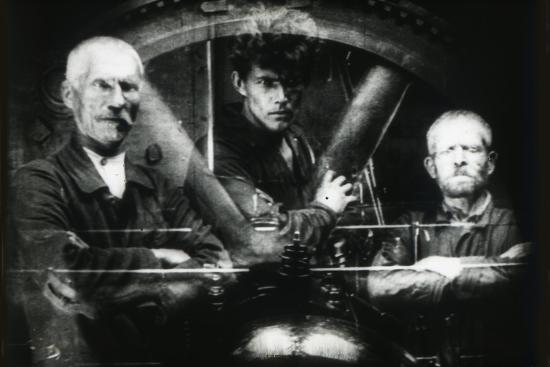
‘Strike’ (Sergei Eisenstein, 1925) is a silent propaganda film set in pre-revolutionary Russia that aimed to celebrate a new Soviet Union upon its release[1]. It is part of the Soviet Montage movement that lasted from the 1910s up until the ’30s, of which Eisenstein was one of the main pioneers[2]. Arguably, the use of editing techniques are essential in how the visual storytelling of silent cinema could be adhered to, given the unavailability of audio technology at the time[3]. However, other techniques such as the use of mise en scene could be highlighted as central to how the story is told[4].
In the third part ‘The Factory Is Still’[5], Eisenstein utilizes over-tonal montage to expressively convey key messages as part of poetic silent cinema[6]. The cinematographer Eduard Tisse opens the sequence with a long held close up of a vulnerable duckling, before cutting to a line of ducklings walking on land. This is followed by more rapid cuts between images of a kitten and a litter of piglets[7]. The staccato editing references tonal montage in that animals are being used as a tool to communicate innocence and new life, which mirrors how the proletariats are naively happy as their strike begins. Metric montage can also be considered here because the cuts become increasingly close together to further a sense of immediacy and demonstrate a jovial attitude[8]. This outlines the importance of visual storytelling to the silent cinema era provided the focus on expressive over realist ideas. Furthermore, the emotional response of happiness associated with the expressive use of editing to conjure the reaction means that editing was central to how the story was told[9].
In addition, the workers are shown collectively in a wide shot later on, sat around a table in the sunshine eating and talking. This scene is contrasted by a wide shot of the stockholder played by Pavel Paltoratskiy[10],sat alone in the darkness surrounded by factory chimneys. Vladimir Lenin is quoted at the start of the film: ‘Without the organization of the masses, the proletariat is nothing’ which pays homage to Marxism and the idea that the labourers can only be successful as a team in fighting back against the individualist machine of capitalism. The juxtaposition created by the editing here means that this message can be delivered to Russian citizens in order to reassure them of soviet victory, while also doing so expressively as part of a visual manual for revolution[11].
However, the editing could be seen as less central in this section observing the equal importance of mise en scene and performance[12]. The workers are surrounded by natural light and trees which equates rejuvenation and positivity to the collective, while the wide shot of the stockholder isolates him, and dark shadows are cast on the table to present a negative connotation. Factory chimneys looming in the background oppose the trees in the first shot and add to the representation of industry and the Tsarist government as destructive. The exaggerated performance of Paltoratskiy, where he spits out his wine in distaste and chucks it over his shoulder in a bio-mechanical fashion mocks the machine-like nature of capitalism and also refers to theatrical influences on silent cinema. Through this and the casting of a larger actor to play the role, he expressively portrays the piggishness of autocrats, creating a caricature that attacks the greedy and lazy mindsets of this group of people. Both the more naturalistic performances and sleeker appearances of the workers serve to highlight a dramatic difference to the Tsarists, which implies that mise en scene and performance are also central to the visual storytelling of the piece.
Overall, it can be inferred editing is central to the visual storytelling of silent cinema, to the extent that other techniques in ‘Strike’ have been used purposefully to display the anti-autocratic ideology of the director, as well as to outline the narrative[13].
19/20 (A*)
Teacher feedback
WWW:
- A clear and concise answer with well organized thoughts and accurate use of terminology
- Sufficient amount of analysis
EBI:
Consider how the editing brings these other elements together and gets them to comment on one another
Key terms
- Soviet Union – a superstate that spanned Eastern Europe and Northern Asia, originating in Russia and governed by the communist party ↩️
- The Soviet Montage Movement – film movement specific to Soviet Russia that focused on editing as a mechanism to create meaning visually ↩️
- Silent Cinema – the era of filmmaking before synchronised sound was used on a large scale (1890s – 1920s) ↩️
- Mise en scene – everything that can be seen in the frame: set design, lighting, costume, colour palette and composition ↩️
- Over-tonal Montage – a culmination of the four other editing techniques Eisenstein came up with: metric, rhythmic, tonal and intellectual ↩️
- Poetic Silent Cinema – Silent Cinema was ‘poetic’ in that it favoured expressionism over realism, using visual symbols to covey meaning ↩️
- Tonal montage – shots are arranged with the intention to evoke a certain emotion in the audience, depending on lighting, depth of field and subject matter ↩️
- Metric montage – editing based on time and frame count ↩️
- Vladimir Lenin – an important figure in the Bolshevik revolution who followed Marxism ↩️
- Marxism – The belief that capitalism would eventually be overthrown by socialism, leading to a classless/communist society ↩️
- Tsarist government – the Tsars were an absolute monarchy, meaning they had complete control over the country with little to no institutional assessments. The Russian government was ruled over by the Tsars from the late 1600s up until the early 1900s ↩️
- Bio mechanical – a mode of physical performance stressing precision and robotic movement, linking to the theatre which had a lot of influence over silent cinema since this was what people watched before film ↩️
- Caricature – visual expression exaggerating specific features for a satirical effect ↩️
- Anti autocratic – An ideology resistant to tyranny ↩️
Extra notes from me
- I usually give some background info on the film in my introductions, just because it makes it easier to frame my argument and remember what I’m talking about. However, this isn’t as important as using the wording of the question at the start of an essay ↩️
- Employing key terms (film language, shot types, film movements etc.) that have come up during your course gets you marks! This is another reason why including some background information could be useful to you ↩️
- Using the words from the question helps you focus in on exactly what it’s asking you and shows the examiner you understand ↩️
- I am cautious with my wording, using terms like ‘could’ and ‘arguably’ so that my argument isn’t too biased ↩️
- Referring to specific parts of the film is good ↩️
- Think about the PEEL style you might have used in English: start with your Point (mini introduction)↩️
- Then present your Evidence ↩️
- Explanation ↩️
- And finally Link back to the question ↩️
- Name drop, name drop, name drop! ↩️
- I keep my sentences and paragraphs short and concise ↩️
- Notice how I’m raising a different point here as the question asks you to ‘discuss’ ↩️
- A conclusion is always great to close your argument effectively, and possibly a good time to add in any last information you might have missed out within the essay ↩️
s19-8671-02.pdf – link to 2019 past paper
s19-A670U20-1 EDUQAS A Level Film Studies – Comp 2 MS S19.pdf – link to 2019 mark scheme